Turning 50 doesn’t mean your wardrobe has to follow some invisible rulebook written by someone who gave up. If anything, it’s a decent moment to get intentional about what you actually wear. Fashion over 50 isn’t about dressing older, it’s about dressing in a way that fits who you are right now. Your body’s changed, your budget’s probably shifted, and your patience for clothes that don’t work has likely hit zero.
As women age, spending habits, body shapes, and skin tones all move around on you. What we’re covering here is practical: how those body changes affect what fits, how to build a wardrobe that makes mornings easier, and where your money is actually worth spending.
How Your Body Changes What Fits
By 50, your body has done a lot of quiet renegotiating. Foot width tends to increase for a lot of women, which genuinely surprised me the first time a client mentioned her shoes felt wrong before anything else did. Hormonal shifts redistribute weight, often around the midsection, so clothes that fit five years ago may pull or gap in places they never used to. That’s not failure; it’s just physics.
Shopping becomes a bit of a puzzle because of all this. Brands you’ve trusted for years may suddenly run strangely. From what I’ve seen, the women who adapt fastest are the ones who stop fighting their current shape and start dressing it. Structured blazers, for instance, do a lot of heavy lifting around the waist. Wrap dresses tend to be forgiving across a wide range of sizes, and they don’t feel like a compromise.
According to AARP data from 2023, women aged 55 and older spend roughly 18% more per clothing item than they did in younger years. That tracks, because buying fewer things that actually fit ends up costing more per piece. It’s a reasonable trade.
Building a Capsule Wardrobe After 50
A capsule wardrobe for fashion over 50 comes down to about 15 to 20 pieces you genuinely reach for. Not aspirational pieces, real ones. The goal is a mix-and-match setup where getting dressed stops feeling like a decision you have to power through before coffee. Key pieces worth anchoring yours around:
- Quality denim that fits your current shape without cutting into your waist
- Structured blazers, because they polish almost any outfit with very little effort
- Wrap dresses, which move well from daytime errands to an actual evening out
Neutral colors are your backbone here, with a few bolder pieces to keep things from going flat. I’d lean toward timeless cuts over anything trend-driven, mostly because trends at this price point rarely last two seasons. A well-edited wardrobe saves money and decision fatigue, which is worth more than it sounds.
Color, Fabric, and Fit Priorities
Skin tone shifts as you age, and so do the colors that sit well against it. Rich blues, soft greens, and dusty pinks tend to brighten a mature complexion rather than drain it. That said, what works is personal, so treat those as a starting point rather than a decree.
Fabric matters more after menopause than most style guides admit. Temperature sensitivity is real, and synthetic fabrics make it worse. Natural materials like cotton, linen, and wool breathe better and feel less punishing on difficult days. They also tend to hold their shape longer, which matters when you’re spending more per piece.
Fit is where most women over 50 lose the plot, honestly. Ill-fitting clothes are uncomfortable and rarely look intentional. Tailoring costs anywhere from $15 to $80 depending on what needs doing, and it’s almost always worth it. A good pair of trousers taken in at the waist looks custom. Same trousers straight off the rack, not so much.
Where to Shop and What to Spend
Fast fashion is tempting because it’s cheap and immediate, but the quality usually shows within a few washes. For fashion over 50, the better move is hunting for brands that prioritize fit and construction over seasonal churn. You don’t need a designer budget; you need to know what you’re looking at.
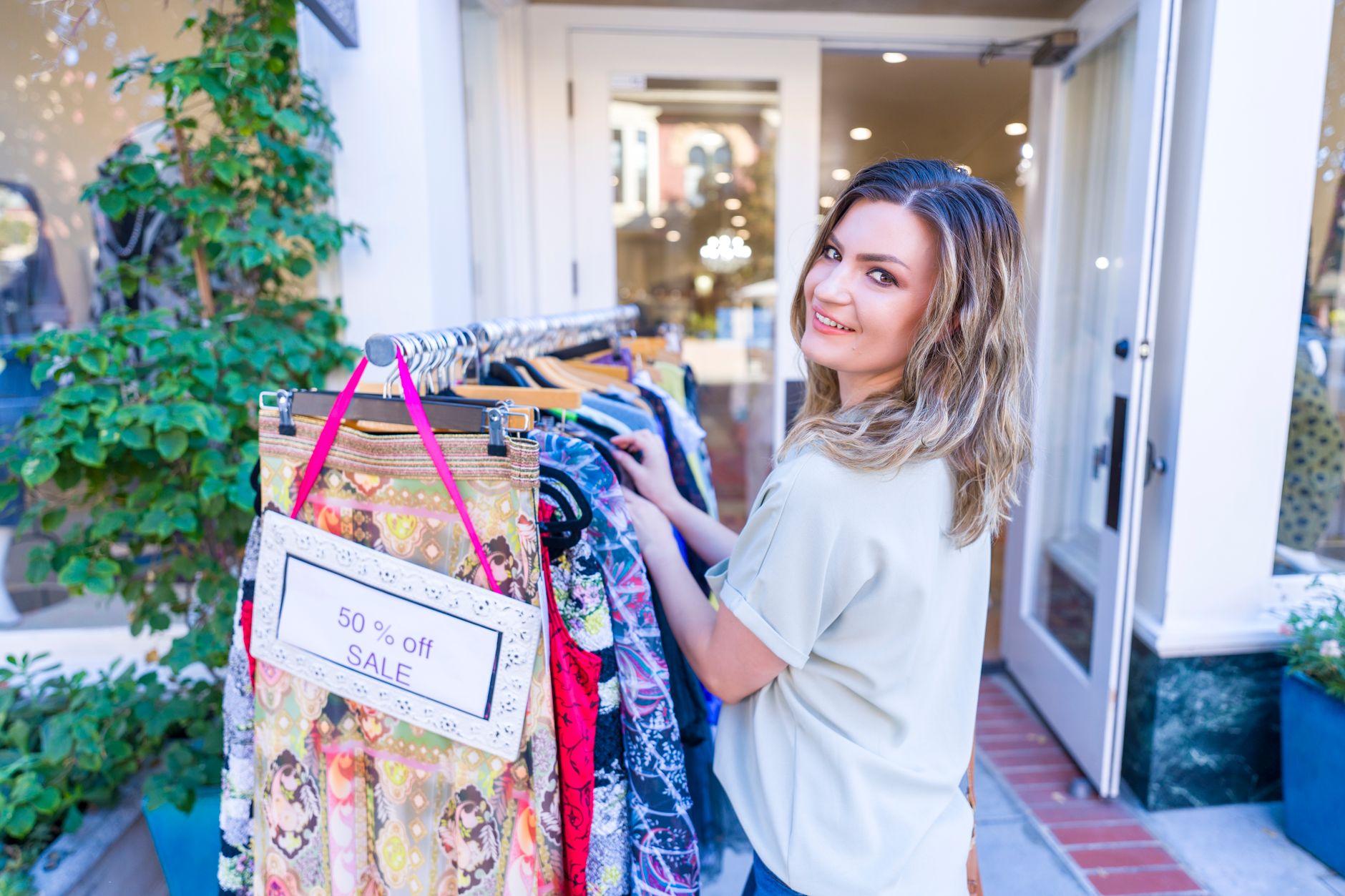
Thrift stores and consignment shops are genuinely underrated here. I’ve found Eileen Fisher and Banana Republic pieces for under $20 at a good consignment shop, which would’ve cost ten times that new. Online shopping works fine if you check the return policy first, since fit is everything and you can’t know until it’s on your body.
Set a budget that reflects your life, not a magazine’s version of it. Spend more on the things you wear constantly (a great blazer, well-fitting jeans) and less on pieces you’re testing out. That ratio tends to work better than spreading the budget evenly across everything.
Getting Your Style to Stick
The practical stuff matters, but fashion over 50 also requires a bit of honesty about what you actually like versus what you think you should wear. Those two lists are often different. Clearing out clothes that don’t fit your current body, even if they’re beautiful, frees up mental space and makes your wardrobe feel like yours again.
Start with fit, build toward color, and let fabric do some of the comfort work. A capsule of 15 to 20 real pieces beats a closet full of maybes. And if something needs tailoring, just get it done.
FAQs
What colors are most flattering over 50?
Rich blues, soft greens, and dusty pinks tend to brighten mature complexions. Personal skin tone matters, so treat these as a starting point.
Is it worth tailoring clothes after 50?
Yes, almost always. Alterations run $15 to $80 and a well-fitted garment looks significantly better than one that’s close but not quite right.
What should you stop wearing after 50?
Skip clothes that don’t fit your current body, regardless of how they once looked. Comfort and fit matter more than trend at this stage.