Renaissance era fashion produced something remarkable: one garment, the farthingale, required up to 15 yards of stiffened fabric just to hold its shape. The engineering behind sixteenth-century clothing was closer to architecture than dressmaking, and that obsession with structure is still visible in couture collections today. What started in the Italian city-states around 1400 eventually rewired how all of Europe thought about clothing, status, and the body itself.
What makes this period genuinely interesting, compared to medieval dress before it or Baroque excess after it, is how deliberately self-conscious it was. People weren’t just wearing clothes; they were making arguments about wealth and learning. The merchant class had money but wanted the visual vocabulary of the nobility, and fashion became the fastest way to close that gap. Tailors responded accordingly.
This piece traces the key garments, the cities that drove change, the craftspeople behind the work, and what any of it has to do with what designers are still doing now.
Key Garments of the Renaissance
The doublet is probably the defining garment of the period for men: a close-fitted jacket, often padded at the chest, worn over a linen shirt. Women’s dress centered on the kirtle and gown combination, layered carefully so the underskirt showed deliberately at the hem. Neither was simple to make. A well-constructed doublet could take a tailor two weeks of solid work, which put quality versions firmly out of reach for most people.
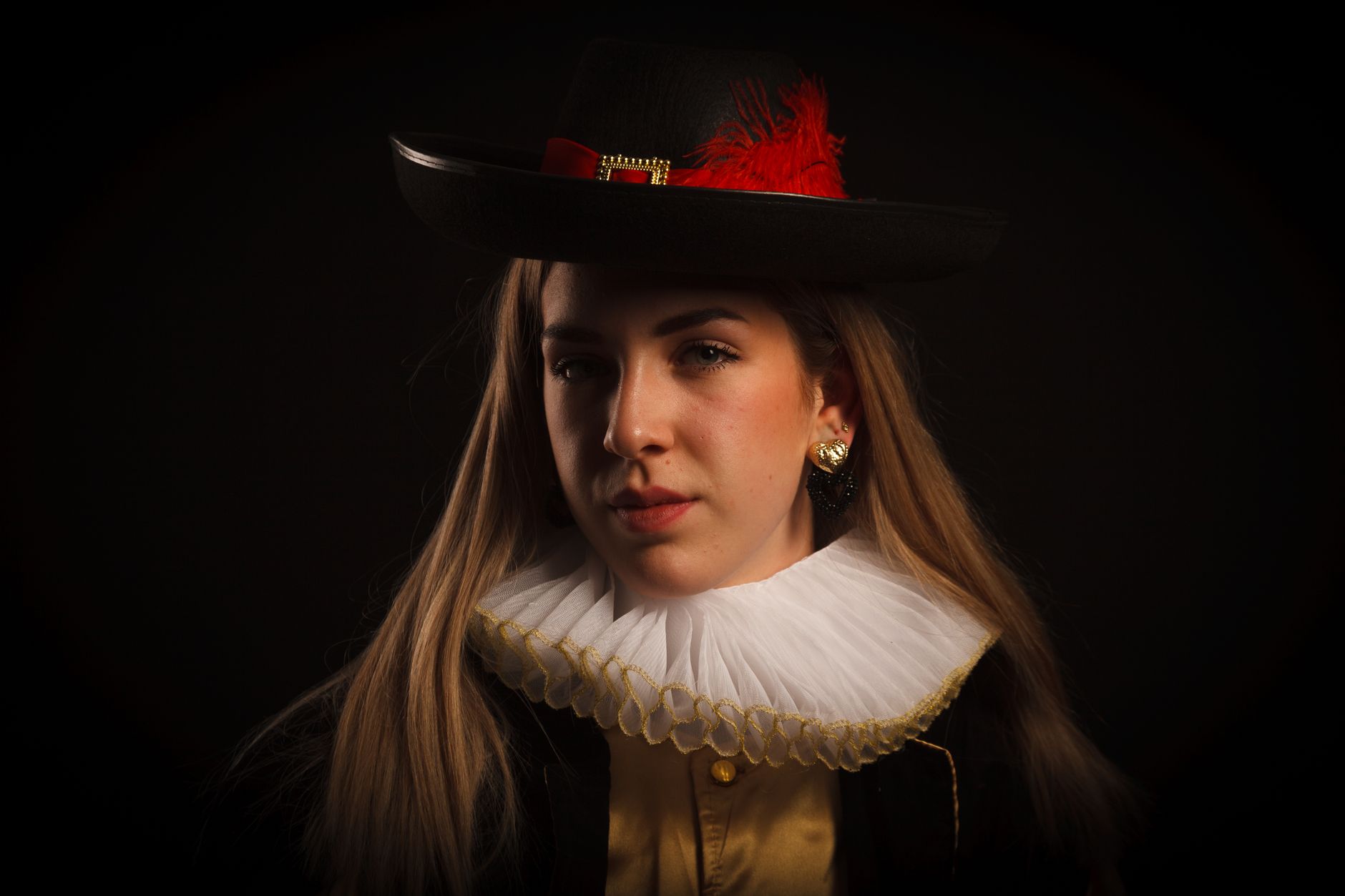
The ruff, that cartwheel collar that looks almost absurd to modern eyes, came into fashion around 1560 and stayed for nearly 70 years. It required starch, special irons, and a skilled laundress to maintain. Owning a good ruff was a maintenance commitment, not just a purchase, and it functioned the way a designer handbag does now: a high-visibility signal that you could afford the upkeep.
Major Fashion Centers in Europe
Florence and Venice set the early agenda, largely because Italian merchants controlled the silk trade. Florence’s wool guilds had been accumulating wealth since the 1300s, and that money funded workshops where textile innovation actually happened. By the mid-1400s, Florentine brocade was being exported to courts across Europe.
Spain became dominant later, particularly from the 1520s onward. Spanish court dress favored darker colors and severe silhouettes, which spread through Habsburg-controlled territories into the Netherlands and eventually England. The contrast with Italian fashion is sharp: Italian dress leaned toward rich color and ornamental surface detail, while Spanish influence pushed toward restraint and geometric form. Both traditions left marks on what came after, and honestly it’s hard to overstate how differently those two currents felt side by side.
Notable Designers of the Era
The Renaissance didn’t have designers in the modern sense. No fashion houses, no ready-to-wear collections. What existed instead were master tailors with royal or noble patronage, and their names survived mainly through guild records and court accounts. Federico de Vinciolo, a Venetian lace-maker who worked at the French court of Henry III, is one of the few who became genuinely famous in his own time, mostly because he published a pattern book in 1587 that circulated widely.
In England, the royal wardrobe accounts mention a tailor named Walter Fyshe who produced doublets for Henry VIII at costs exceeding a craftsman’s annual wage. These weren’t designers in any creative sense we’d recognize today. The patron drove the aesthetic. The tailor made it technically possible.
Fabrics and Textiles Used
The hierarchy of fabrics was strict and legally enforced in some places. Silk velvet sat at the top, followed by brocade, damask, and taffeta. Wool, even very fine wool, was middle-class territory. Linen was universal but invisible, worn against the skin by everyone from servants to kings. Sumptuary laws in England specified exactly which ranks could wear cloth of gold or purple silk, and violations carried real fines.
- Silk velvet: reserved for nobility, dyed in deep crimson or black
- Brocade: woven with raised patterns, often incorporating gold or silver thread
- Damask: reversible weave, slightly more accessible, popular in merchant dress
- Wool broadcloth: the everyday fabric for the middle ranks
- Linen: undergarments and shirts across all social classes
Gender Trends in Renaissance Fashion
Men’s fashion in this period was arguably more theatrical than women’s, at least in the early decades. Slashing, where fabric was deliberately cut to reveal a contrasting layer underneath, was a male fashion first. Puffed sleeves, padded hose, and codpieces made men’s silhouettes wide and assertive at the shoulders and hips, while women’s dress moved in the opposite direction at the waist, using stiffened bodices to create a rigid, conical torso.
By the late 1500s, both silhouettes had become increasingly exaggerated. The farthingale pushed women’s skirts into drum shapes. Men’s trunk hose ballooned at the thigh. Compared to the relatively natural drape of medieval dress, renaissance era fashion was aggressively constructed, and that shift from following the body to reshaping it is the most significant development of the whole period, echoed directly in modern structured tailoring.
Evolution of Fashion Timeline
Early Renaissance dress, roughly 1400 to 1480, still carried Gothic influences: long flowing lines, pointed shoes called poulaines, soft drape. From about 1480 onward, Italian humanist ideas about proportion started reshaping silhouettes toward something more fitted and deliberate. The High Renaissance, 1490 to 1550, is the period most people picture: rich fabrics, square necklines, puffed sleeves.
Late Renaissance dress, from about 1550 to 1620, became increasingly rigid and formal under Spanish influence. Silhouettes stiffened, colors darkened in northern Europe, and surface ornament got denser. By 1620 or so, the Baroque period was already asserting itself. The whole arc took roughly two centuries, which is long by any standard, but the pace of change within it was faster than anything that preceded it (I’d argue by a considerable margin).
Renaissance Era Fashion’s Mark on Today
Renaissance era fashion didn’t fade so much as get absorbed. The structured bodice became the corset, which became the boned bodice in 20th-century couture, which became the boning you’ll still find in a good evening gown. Puff sleeves disappeared, came back in the 1890s, disappeared again, and reappear on runways every few years. The vocabulary of slashing and contrasting layers shows up regularly in avant-garde collections, though whether contemporary designers consciously reach back that far, I genuinely can’t say. What’s harder to trace but equally real is the underlying idea: that clothing should reshape the body rather than simply cover it. That’s a Renaissance idea, and it’s still the central argument in fashion.
FAQs
What were common fabrics in Renaissance fashion?
Silk velvet, brocade, damask, and fine wool were the prestige fabrics. Linen was worn by everyone as underclothing. Sumptuary laws in many regions formally restricted who could wear what.
How did Renaissance fashion differ by gender?
Men’s dress emphasized width at the shoulder and hip through padding and slashing. Women’s dress focused on a rigid, conical waist using stiffened bodices, with skirts increasingly structured by frames like the farthingale.
Who were the leading fashion designers of the Renaissance?
There were no designers as we know them. Master tailors with royal patronage, like Federico de Vinciolo in France, were the closest equivalent. Patrons set taste; tailors executed it.